Here is one deal from start to finish, so every word below has something to hang on. A widow inherits her mother's house. It needs a new roof, a kitchen
and paint, and she lives two states away. She does not want to list it with an agent, wait months and pay for the repairs first. You find her (from a probate
list, or because she found your website), you visit, and you agree to buy the house for $140,000 in 30 days, as is. That signed agreement is your
purchase contract.
You do not plan to buy it. You know investors in that town who buy houses like this one, repair them and sell them for about $260,000. One of them
agrees to take over your contract for $155,000. You assign the contract to him: he steps into your place, closes with the widow at $140,000,
and pays you the $15,000 difference, your assignment fee, at the closing. She sold quickly without lifting a finger; he got a house he can
profit from; you were paid for finding and putting the deal together.
Every piece of wholesaling software exists to make one part of that story faster, cheaper or safer. To pick software, you first need the words.
- Motivated seller
- A motivated seller is anyone willing to accept an offer below market value, no matter the reason. A circumstance such as foreclosure or probate does not make someone motivated: motivation is how a person reacts to their circumstance, and two owners in the same situation react differently. That is why you cannot target motivation; you can only make it easy for the motivated ones to find and pick you.Example: the widow above. Having to sell is not the same as being willing to take less for speed, certainty and no repairs.
- Cash buyer
- An investor who buys houses without a bank loan (or with fast private money), so they can close in days and buy houses no bank would lend on.Your real customer: if no cash buyer wants the deal at your price, you do not have a deal.
- Assignment of contract
- Transferring your rights in a purchase contract to another buyer, who then closes with the seller. You never own the house.Your contract must allow assignment ("and/or assigns" after your name is common), and some states require you to disclose it.
- Assignment fee
- What the cash buyer pays you for the contract: their price minus the seller's price.$155,000 − $140,000 = $15,000.
- Double close
- Instead of assigning, you actually buy the house and sell it to the cash buyer, usually the same day, in two closings.Used when a fee is large, the contract cannot be assigned, or the state limits assignments. It costs two sets of closing costs.
- ARV (after repair value)
- What the house will sell for once it is fixed up, worked out from recent sales of similar, renovated houses nearby ("comps").The $260,000 above.
- Comps (comparable sales)
- Recently sold houses close by, similar in size, age and condition, used to estimate a value.Good comps: sold in the last 3 to 6 months, within about half a mile, similar square footage and bedrooms.
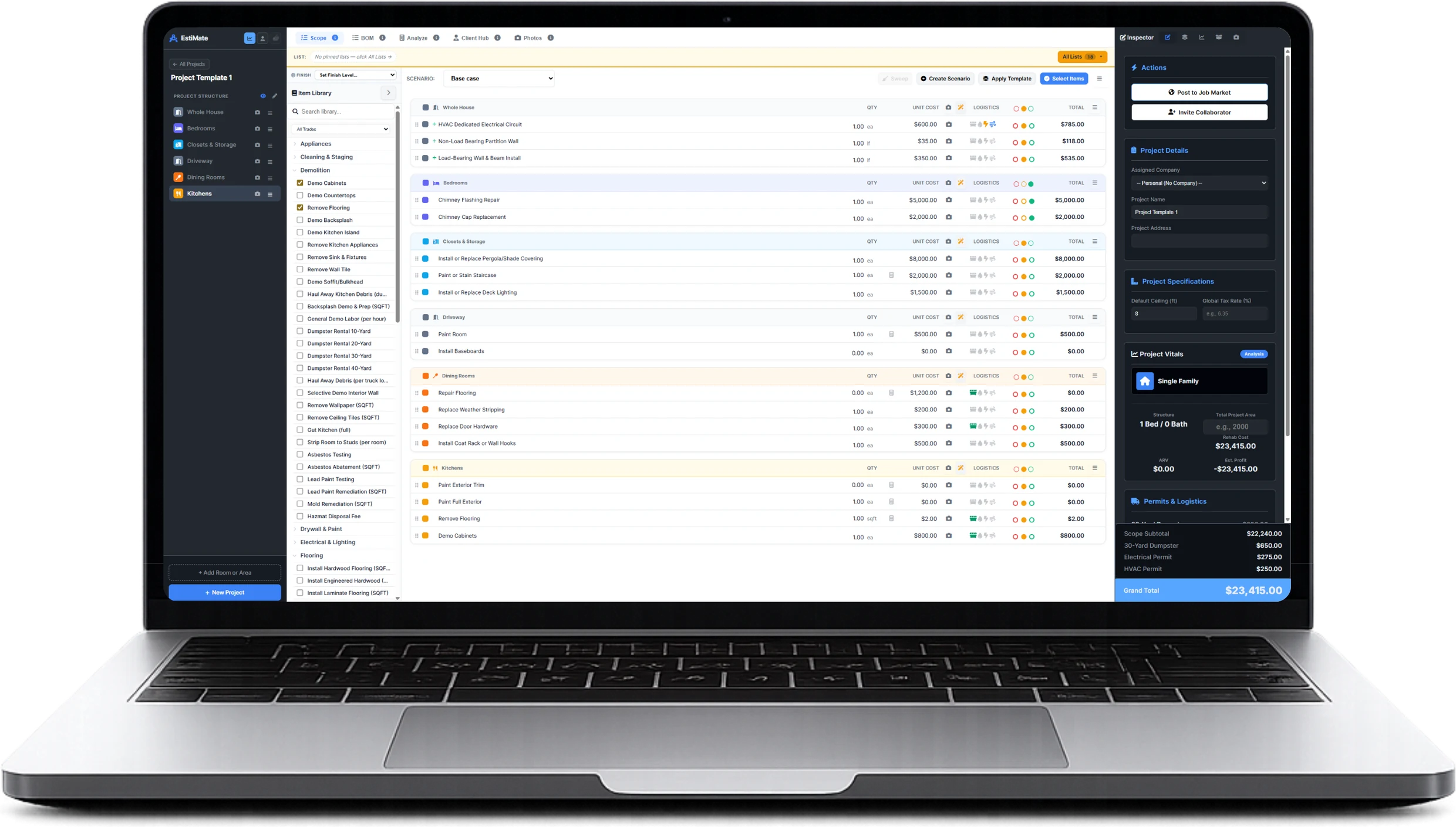
- Repair estimate
- What it will cost the buyer to bring the house up to the ARV: roof, kitchen, paint, permits, dumpsters.Underestimate it and your buyer walks, or asks you to cut your fee ("a retrade").
- MAO (maximum allowable offer)
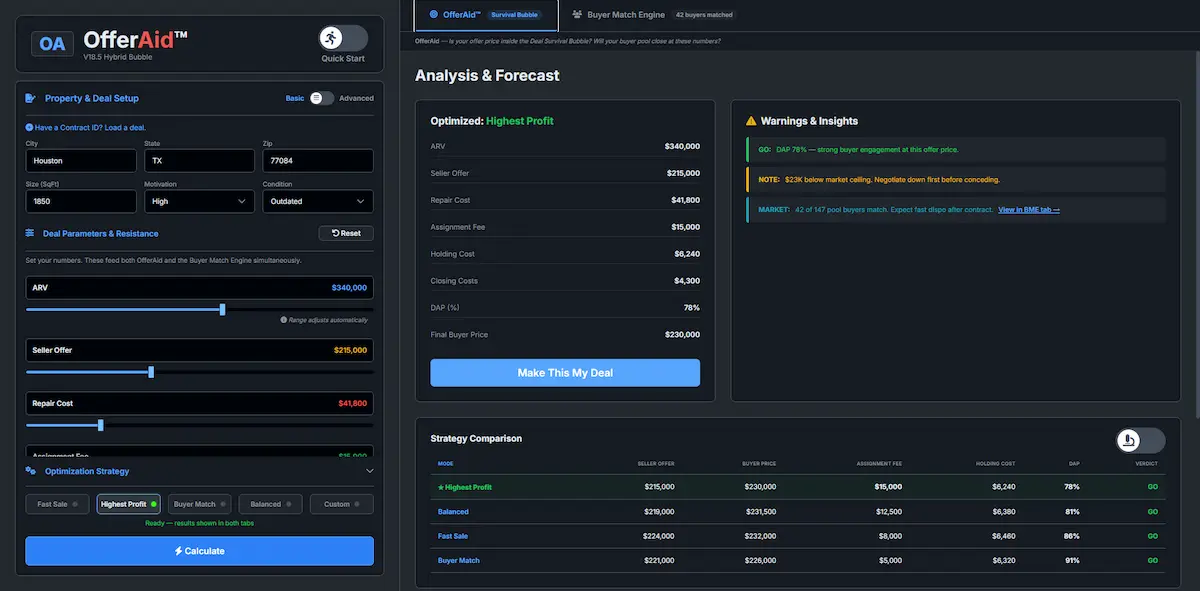
- The most you can pay the seller and still leave room for the buyer's profit, their costs and your fee.The well-known shortcut is 70% of ARV minus repairs; buyer data is better. See how to analyze a wholesale deal.
- Acquisitions and dispositions
- The two halves of a wholesale business: acquisitions gets the contract from the seller; dispositions ("dispo") sells it to the buyer.Most tools are built for one half. A deal needs both.
- Skip tracing
- Looking up an owner's phone numbers and emails from their name and address, through data companies.Paid per match, usually 10 to 15 cents. Numbers are often wrong or on do-not-call lists.
- List stacking
- List stacking is combining lists (probate, tax delinquent, code violations, vacant) to find owners who appear on several. A list only tells you a circumstance, never motivation; an owner with several stressors at once has more reasons to say yes, so you contact them first.An owner on three lists is worth more of your time than one on a single list. Still a clue, not a confirmation.
- Driving for dollars
- Driving neighborhoods to spot neglected houses (overgrown yards, boarded windows), then finding and contacting the owner.Cheap and very targeted, but slow.
- CRM
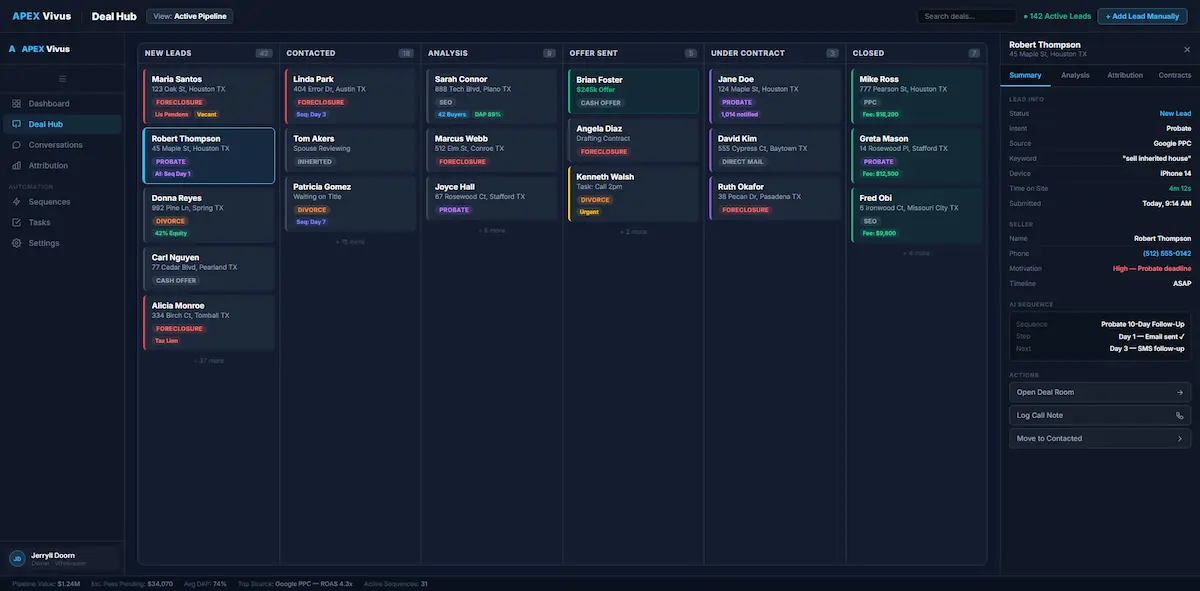
- Customer relationship manager: the system where every lead, call, text, email, note and next step is kept, so nobody falls through the cracks.The heart of any wholesale business: most deals come from the 5th to 12th contact, not the first.
- Equitable interest
- The right to buy a property that your signed contract gives you. It is what you actually sell when you assign.Several states only let you market that interest, not the house itself, without a license.
- Earnest money (EMD)
- A deposit that shows you are serious, held by the title company and lost if you walk away without a reason your contract allows.Ask your cash buyer for a non-refundable deposit when they take your contract.