Website & pages
You are hereThe builder, the design system, PageForge city pages and everything else on this page.
Same hero block. Same three trust icons. Same "We Buy Houses in [City]" headline with a different city dropped into it. Your seller has already closed that page twice this week.
This page is about one box on that line. Apex Vivus is the whole line — from the first postcard to the check, and then straight to the buyers who take the property off your hands. For less than most platforms charge for just a website alone.
Template platforms sell speed, and the trade is always the same: you get a site in an afternoon, and it's the site every other investor in your market got in their afternoon. Sixty of you, one page.
A seller about to give away a house is nervous, and they are checking you out. They open three sites and all three look the same. Same photo, same green button, same promise. By the third one they have stopped seeing a local buyer and started seeing an ad — and you can rewrite your headline all day, that will not fix it.
Eleven template-platform sites and one Apex site. You can spot it from across the room — so can your seller.
I’ve used a lot of real estate software over the years—CRMs, website builders, marketing platforms, estimating tools—you name it. Normally I’m asking questions within five minutes because I can already see where the limitations are. This time I just sat there thinking, “How the hell is that even possible?” What impressed me the most wasn’t the number of features, it was how everything connects together. Nothing feels bolted on or stitched together from separate tools — it feels like the software is thinking several steps ahead instead of making you jump between ten different apps. I genuinely think this is one of the most impressive pieces of real estate software I’ve ever used.

Every website company lets you change your colors, pictures, text and logo. Now they add more colors, easier picture swaps and AI-written content, and call it "no more same sites." But that was never the problem.
The problem is the page underneath. On a cookie-cutter platform it's the same page everybody else got — the same sections, in the same order, in the same shape. Changing the color just repaints the same house. Apex lets you change the house.
All nine of these were built on Apex. Different look, different colors, different type, different layout, different personality. A different website entirely. Not one of them is a skin on another.


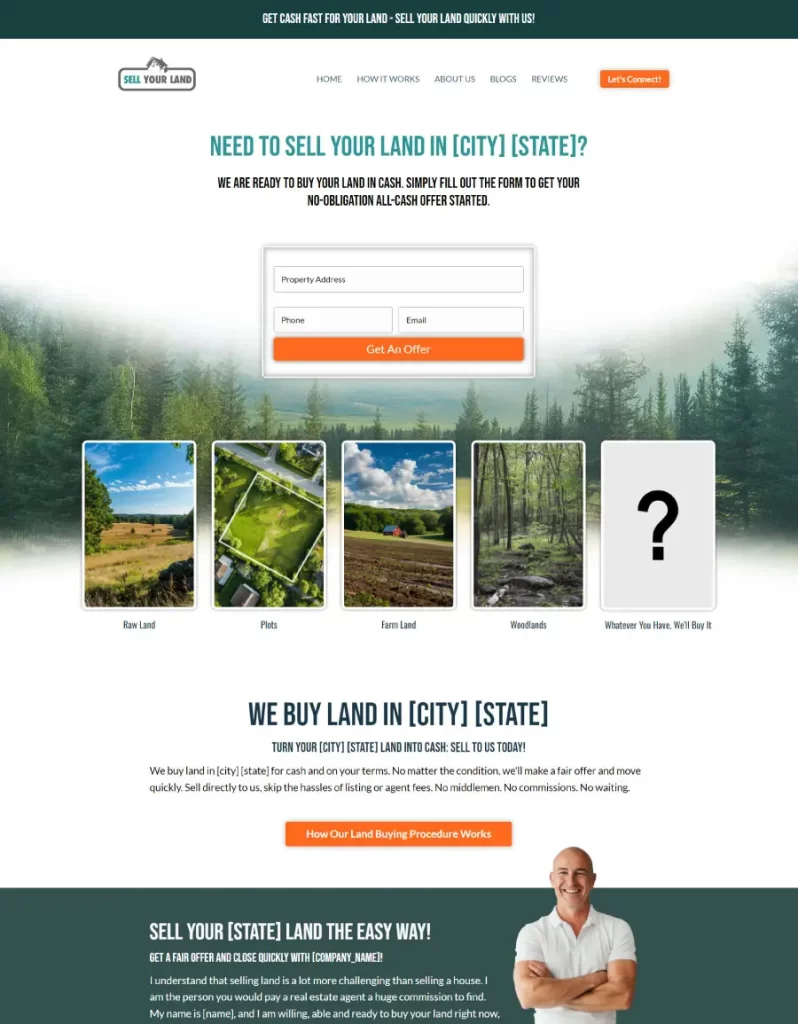
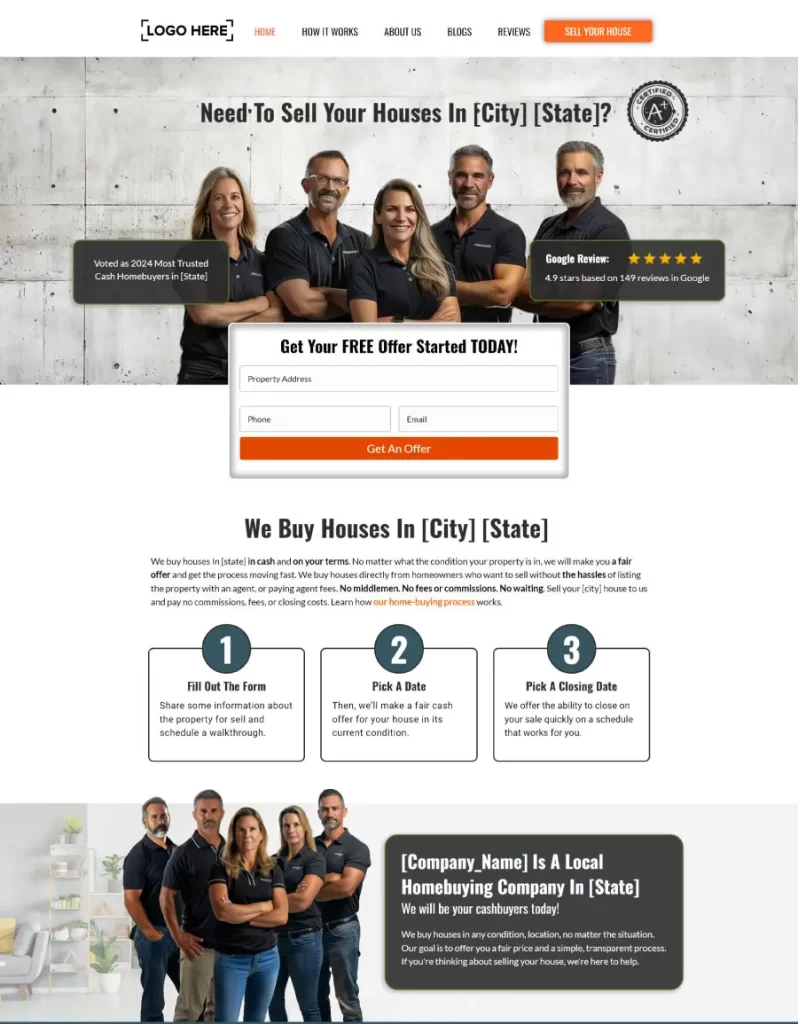

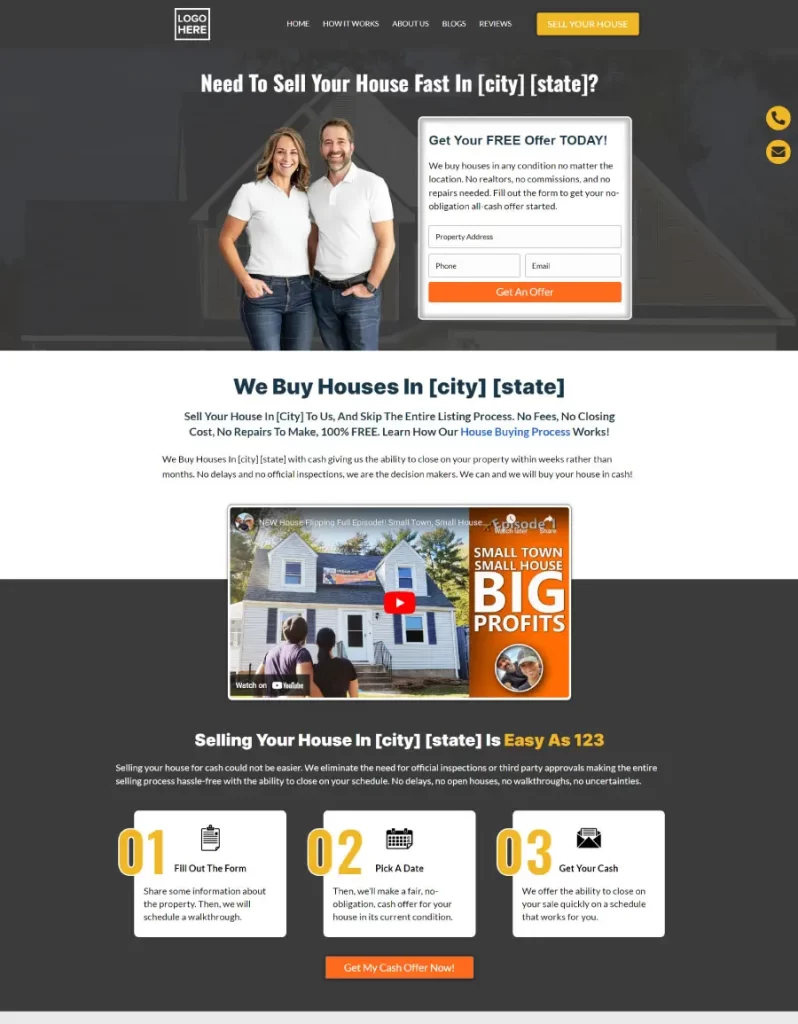

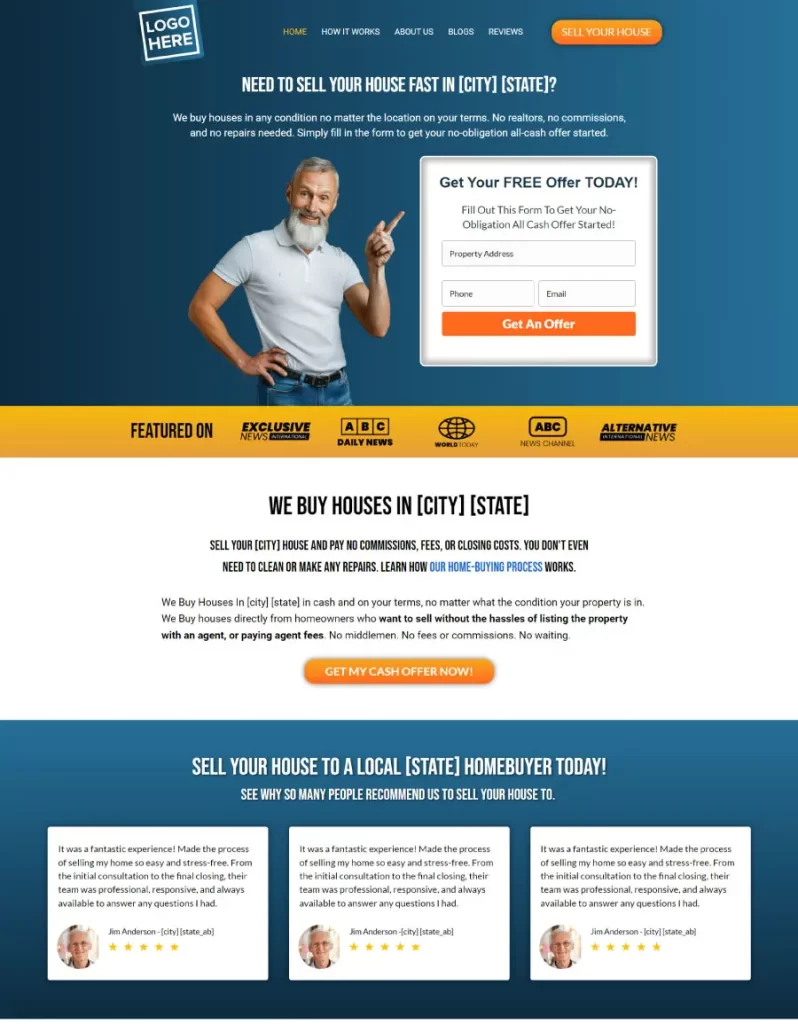

Template platforms hit green because there's almost nothing on the page — a headline, a stock photo, and a form. That's not optimization, it's absence.
But here is the problem. They sell you on lightning-fast, SEO-optimized templates. Then you buy one, it isn't bringing you deals, and the answer you get is: "well, you have to swap the pictures and put your own text in."
Those are the very things that made the template fast and optimized in the first place. Their own fix undoes the entire promise you bought.
So which is it? Either the template is fast and you mustn't touch it, or you make it your own and the number on the box stops describing your website. It cannot be both.
Here is an entire Apex site instead, top to bottom, nothing cropped out. Fourteen sections, dozens of photographs, a live estimate tool, a review wall, and a contact form. It scores 100. Scroll it and check the specs against it as you go.
Agentic Browsing. More and more sellers ask ChatGPT about you before they ask you. This checks whether an AI can actually read your site. Yours passes all three.
https://general-contractor-a.apexvivus.com/
See the full PageSpeed report
A homeowner uploads their room, sees it rebuilt, and gets a price — on your site, at midnight, while they are still deciding. Nobody else on their list can do that.
1
2
3
4
My old site scored a 47 on mobile because of the photo gallery, and every "fix" meant deleting something I actually wanted. My Apex site has more photography than the old one did and it scores 96. I stopped having to choose between looking good and loading fast.
The website is where a seller meets you. It is not the business. Here is the rest of what's already in the same account, at the same login, on the same lead record — with no second subscription and nothing to connect up.
The builder, the design system, PageForge city pages and everything else on this page.
Leads, stages, notes and tasks. Every lead arrives carrying the route that produced it.
Tracked numbers, calls and SMS from inside the record, with consent handled before you send.
Mail, email and follow-up that runs itself, with the spend attached so ROI is calculated, not guessed.
Owner, equity and contact details pulled onto the record, so you know what you're looking at before you call.
Price the deal — repairs, margins and your maximum offer — without leaving the lead.
Get the agreement signed, then work the DealRoom, your buyer list and the chat that moves it back out.
Every investor on Apex is a potential buyer for your next deal. Put a contract in front of qualified buyers in seconds instead of rebuilding a list.
Impact Tracker and True Attribution, tying every dollar you spent to the check you banked.
If you're arriving from a platform that sold you a website, this is the part that doesn't compare. You are not buying a site with tools bolted on. You are buying the system, and the site is the front door of it.
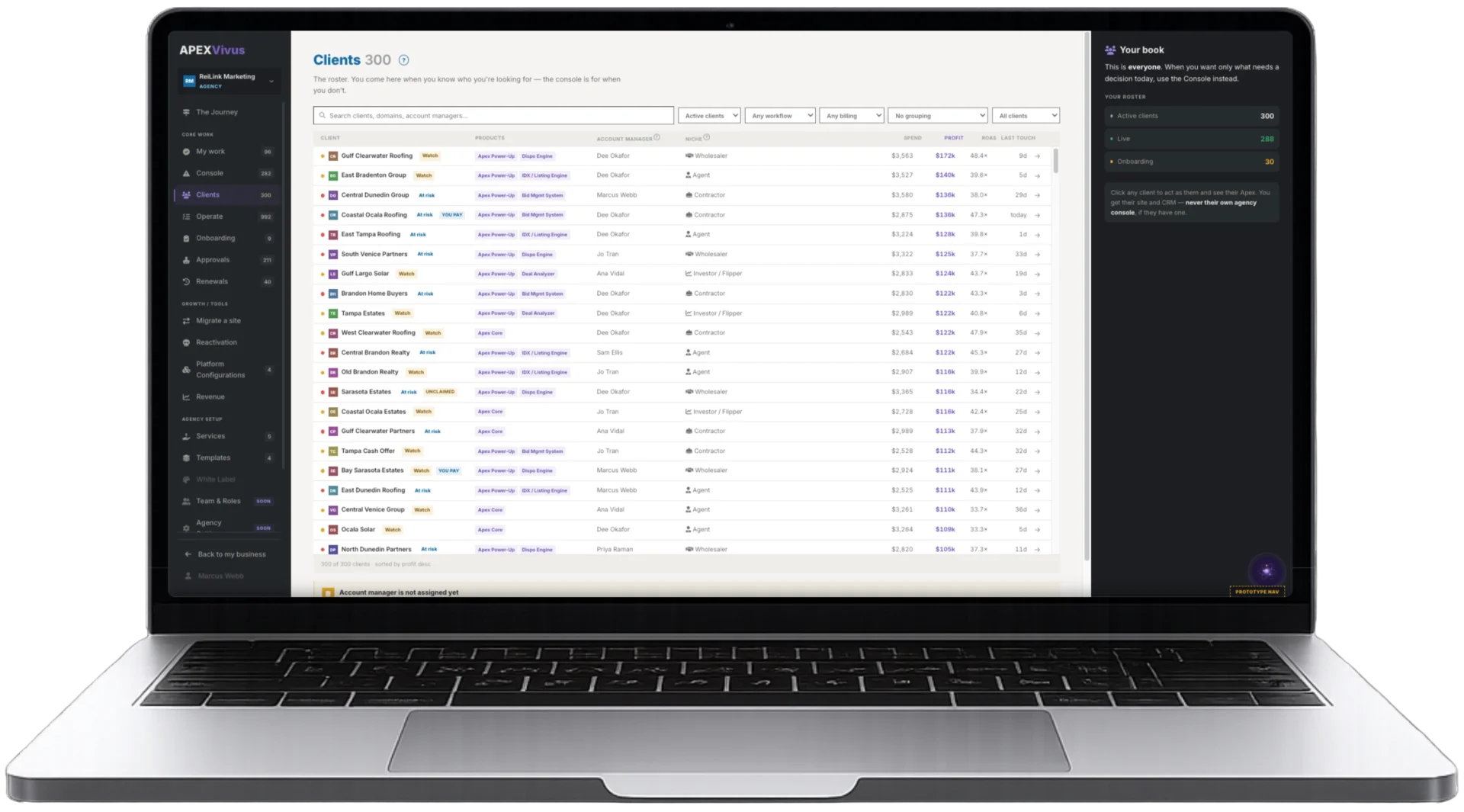
Whether you build sites for clients, teach a system, or just have people who listen to you — imagine being worth more to them than advice. Imagine handing them the machine that runs it.
The whole deal, end to end: the site that finds the seller, the CRM that works them, the calculator that prices the offer, the contract that closes it, and the buyer who takes it off your hands. One account, your brand on it, at one price you set.
Everybody else in your space is recommending five separate subscriptions and collecting a referral fee on each. That gap is your competitive advantage.
You already build and market for clients. Stop charging for the build and start charging every month — same work, recurring revenue.
Your students walk out and try to rebuild your system from notes. Ship it as software instead — your method built into their site, first lead to signed contract in one account.
Today you send them to one company for a website, another for a CRM, another for contracts — and take an affiliate cut of each. Hand them one account under your own brand instead.
Text, photos, video, buttons, columns — the ordinary stuff is all there, and you drag it where you want it.
These eight are the ones nobody else has. You drop them onto a page the same way you'd drop in a photo, and then they do something for you: test your headline, hand a seller a real number, book the appointment, tell you where people gave up reading.
Show half your visitors one headline and half another. A week later you know which one got you more calls. Nothing to set up, nothing extra to buy.
The same page can say something different to the woman who got your probate letter than to the guy who clicked your Dallas ad. One page, not fifty.
A form that asks the next question based on the last answer — so you know whether the house is worth a call before they've finished typing.
A seller types in their address and gets a real number while they're still on your website — not three days later after you've run comps.
A map of the houses you've actually bought, filling itself in from your CRM. Proof you really do work this area, and you never touch it.
Reviews attached to a deal that genuinely closed in your pipeline — not a quote you typed in yourself and hoped nobody checked.
Shows you where people clicked and how far down the page they got before they left. No code to paste, no separate bill.
They pick a time, it lands on your calendar, and the lead is already in your CRM. They click once, both things happen.
Made a section you like — a headline, a photo row, a set of trust badges? Save it, and it's there to reuse on every page and every site you run. Change it once and it changes everywhere you used it.
Everyone else writes one page per city. Humphrey crosses each town with why the seller is selling — probate, tenants, back taxes, divorce — and writes every combination in your voice. However many that comes to.
To turn up on Google in a town, you need a page about that town. Most platforms will now write those for you, and they all come out the same shape: we buy houses in Dallas, we buy houses in Houston, we buy houses in Plano.
Humphrey writes a different sentence.
We buy inherited houses in Dallas
Two things change instead of one — the reason they're selling and the town they're in. Every square below is one page. Tap one and watch the sentence change.
Five towns shown here. Give Humphrey six reasons and fifteen towns and he writes ninety pages — because a woman who just inherited her mother's house in Dallas is not typing the same thing as a landlord in Plano who has had enough of his tenants. Each of them lands on a page written for them.
Point at one you already built. Every new page comes out in that shape — your layout, your photos, your brand.
Two lists, typed once. He crosses them and works out every page that needs to exist.
Professional, friendly neighbor, straight to the point, or gentle. Say it once and every page sounds like you.
He hands them back as normal pages. Rewrite one, delete one, publish the lot. Nothing goes live until you say so.
A website bought on its own can tell you one thing: you got a lead. That's the end of what it knows — it has no idea what happened next, because the rest of your business lives somewhere else.
Apex builds the site and runs the CRM. So every page starts watching the day it goes live, and everything it learns lands on the same lead record you're already working.
Most tools lose the thread the moment a lead becomes a deal. Apex doesn't. It follows the same person from the postcard that reached them, through the ad they clicked, to the page they read, to the contract they signed — so you find out what your marketing made, not how many forms it filled.
Every page a seller read before they called you — and the exact page where the ones who didn't call gave up.
Where people clicked, how far down they read, and the part of your page nobody has ever seen.
Which question made them stop typing. Not "the form is too long" — which question.
A score for every page and a list telling you which one to fix first, and what's slowing it.
Google Search Console wired in, the pages sitting just off page one flagged, and indexing requested for you.
Point a domain you own, or buy one here. Apex checks it's working before it flips the switch.
A seller site, a buyer site, a niche site. One login, separate brands, separate lead flows — and you can run them for other people's businesses too.
Every form becomes a lead record with its source, its campaign and its whole visit history attached.
Every change you make and every dollar you spend, on one timeline with your leads. So when the phone goes quiet you know exactly what caused it — instead of cutting the thing that was feeding you.
Impact Tracker is your flight recorder. Every marketing move and every website change gets laid over your traffic, your conversions and your leads on one timeline — so cause and effect is obvious instead of a guess.
Almost all of it marks itself. A page goes live, a form gets edited, a headline changes — Humphrey was there, so it lands on the timeline without you doing anything.
Your ad spend marks itself too. He is connected to your Google Ads and Facebook accounts and reads the daily numbers, so the day you doubled a budget appears on the graph on its own — you don't tell him, he already knows.
And anything you put a code on marks itself. The QR on a postcard, the link in a cold email, the tracked number on a sign, the vanity URL on a radio spot — the moment somebody uses one, the campaign that sent them is on the timeline with them.
The only thing left for you to type is the day a physical thing happened that nobody has responded to yet — the morning five thousand mailers actually dropped. One date, and the whole drop is measurable from then on.
Change ten things in three weeks and you still get ten separate marks. Nothing gets blended together, so you can tell which one moved the needle and how far.
Each row here is one of the diamonds on the timeline above. Click it to see what that change cost and what it made.
"Why did conversions fall on the 22nd?"
Two things landed that day. You swapped the homepage hero image, and your Google budget doubled. The new traffic converted at 1.4% instead of 3.4% — it was broader, colder, and mostly on phones. The hero swap wasn't the problem, the extra spend was. Your old traffic is still converting fine, and I'd put the budget back before you touch the page again.
Ask him anything about the business — the leads, the spend, the pages, the deals — and he reads all of it at once. An AI hands you back what you asked for. Humphrey is an IA — an Intelligent Awareness. He doesn't stop at the number. He tells you what it means, what caused it, what to do about it, and the thing you didn't know to ask.
Every mailer gets its own web address and QR code. Scan it or type it in, and we know which drop they came from.
Each person gets their own link. Not one link for the whole blast — one per person.
Your callers use a tracked number tied to the list, so the call shows up on the graph too.
We grab the ad click as it happens and keep it attached to that person.
Put a vanity URL or a QR code on it. Or don't — just pick the campaign from a dropdown and mark the day it ran.
Google searches, someone typing your name in, a link from another site.
Most systems lose the tag halfway down the pipeline. You know a lead came from a postcard — and then it becomes a deal and the postcard is gone. So you can tell someone your cost per lead, but nobody in this business can tell you what a postcard is worth in assignment fees. In Apex the tag is welded to the deal the whole way.
Which is why Apex can tell you a mailer made $18,500, not that it made fourteen leads. Leads don't pay anybody.
The postcard sends them to your site. The ad sends them to your site. The email sends them to your site. Your website is the one place all of it comes together — which is why it can't sit at a different company than your CRM.
A page goes live, a form gets edited, a campaign starts spending — the mark appears on its own. The offline stuff, like a mail drop or a calling week, you type in once and it stays on the graph forever.
It catches the day something got worse, not just the day something got better — like the $2,100 that bought six leads and no deals, before you spend it again next month.
Every touch stays attached to the same person, from the first mailer to the signed contract. You stop paying for what got the last click and start paying for what actually produced the check.
A man gets your postcard in March and puts it on the kitchen counter. Three weeks later he Googles "sell my house fast" and reads two of your pages. A week after that he clicks one of your ads and finally fills in the form.
Every other tool writes down one thing: the last click. So the ad gets all the credit, the postcard gets none, and at the end of the month you cancel the mailer that actually started the deal.
Apex keeps every single touch, tied to that one man, all the way to the amount on the check.
He scans the QR code
Reads two pages, doesn't call
Different device, same man
All three touches attached
Profit written back to each touch
The mailer looks dead. You cancel it — and two months later the ads dry up.
All three get their share of the $18,500, in the order they happened.
Same deal. Same data. One of them tells you to cancel the mailer.
I'm looking at your leads, your spend, your deals and your traffic all day. You can ask me anything in plain English:
Most comparison pages are rigged — the company writes it, so the company wins every row. So we wrote one to be checked instead. Every claim about the other platform is quoted from their own public pricing, feature and help pages, sourced at the bottom.
Where they do something better than us, we say so and show you what it is. You're choosing what to run your business on — you should get the whole picture, not the flattering half of it.
I run sites for fourteen investor clients. It used to take me the better part of a week per client just to get city pages up. PageForge does them in an afternoon and they stay editable afterward, so I am not locked out of my own work. I took on six more clients without hiring anyone.
Nobody has ever wanted a website. You want the phone to ring with people who already trust you.
Not the fourth version of the same page a seller saw this week.
A new campaign page on Tuesday, live Tuesday, without a ticket or an invoice.
Which page, which ad, which form field. Not a monthly lead count.
Apex was built backwards from those three things — which is why the builder isn't a product we sell next to the CRM. It's the front door of the same system.
Pick a template, set your brand, and point your domain — most operators are live the same day. Your existing content can be brought over page by page, and your domain stays yours the entire time. Nothing about the switch requires you to pause your ad spend.
No. Start from a template, and the guided flow walks you through templates, then brand, then pages. If you never open the Page Editor, you still get a complete site. The editor is there for the day you want a page nobody else has, not as a requirement on day one.
Yes. Connect a domain you already own, or register a new one from inside the app. Go Live checks that DNS is pointing correctly and confirms the site is reachable before it marks you as live, so you're not guessing whether the switch worked.
It copies a page you already made and liked, in whatever tone you picked, and everything it writes lands as a normal page you can rewrite or bin. You read them before anything goes live, and you see the price before it starts. It's a first draft for forty towns at once — not a button that publishes things you haven't seen.
Same platform, same login, no connector in the middle. A form submission becomes a lead record with its source, campaign, and full visit history already attached. Attribution, sequences, and the deal pipeline read from that same record.
Yes. Sellers, buyers, a niche play, a second market — each site has its own brand, its own pages, and its own lead flow, all under one account. You switch between them from the site selector without logging out.
Yes — that's Apex Agency, and it's a whole side of the platform rather than a permission toggle. You get a client console, your own service catalog at your own prices, and billing through your own Stripe account so the money goes to you.
Two ways to charge: your client pays the Apex platform fee themselves and you bill only your service on top, or you pay the platform fee and charge the client one price you set. There's a separate page that walks through the whole thing, including moving a client's existing site over.
The domain is registered in your name and the words and photos are yours. Your pages are saved in a standard format rather than something only Apex can open, so you're not held hostage by the file type.
Take the page you send the most traffic to. Rebuild it in Apex, point half your traffic at it, and let the A/B block settle the argument.