Seller lead stages explained: what each one means and what moves a lead on.
Updated · About 12 minutes to read
A seller lead moves through seven stages, New, Contacted, Talked, Appointment, Offer Sent, Under Contract and Closed, with two side lanes, Follow-up (not now) and Dead (never, or stop). Each stage has one rule: a lead moves on only when something happened, not when you hope it will. Below is every stage, what it means, what has to be true to move a lead out of it, what you do while it is there, and how long is too long.
If you are new: stages are the columns on a CRM board. They tell your whole team, at a glance, how far each conversation has gone and what each seller needs next.
What are seller lead stages, and why do they matter?
Seller lead stages are the named steps a motivated seller lead moves through, from the first contact to a closed deal, each defined by something that has happened (you talked, you saw the house, they have your offer), so everyone on a team agrees where each lead stands and what it needs next.
Stages turn "I have 140 leads" into "I have 12 offers waiting for an answer and 9 sellers I have not reached yet". That second sentence tells you what to do today. They also show where deals die: if most of your leads stop at Contacted, you are not reaching people; if they stop at Offer Sent, your offers or your follow-up need work.
Do it for real, step by step, in the free wholesaling course.
This guide explains seller lead stages explained. The Ethical Wholesaling Course walks you through it as part of your first deal, one lesson and one task a day for 30 days, with Humphrey in every lesson as a mentor who knows where you are. It is completely free, and it does not leave the hard parts to you.
You do not have to buy anything. The course is taught inside Apex Vivus, but you can do every lesson with your own website, your own CRM, your own deal analyzer and your own lead sources.
Start the free course →- Free cash buyersready on day one, by market and buy box
- A free deal marketplaceyour contract goes to every buyer it fits
- Free Calculizersthey do the math and flag what is wrong
- A free communitywholesalers, buyers, lenders and agents
What does each seller lead stage mean, and what moves a lead on?
- 1NewThe lead just arrived and nobody has reached them yet.
- 2ContactedYou tried to reach them, or spoke briefly, but have not had a real conversation.
- 3TalkedYou know their situation, the house, their timeline and what they hope for.
- 4AppointmentA walkthrough or meeting is booked.
- 5Offer SentThey have your offer in writing.
- 6Under ContractThe contract is signed by both sides.
- 7ClosedThe deal closed and you were paid.
- sideFollow-upNot now, but not never: wrong timing, not ready, said no for now.
- endDeadWrong number, sold elsewhere, not the owner, or asked you to stop.
| Stage | It means | Moves on when | What you do | Too long |
|---|---|---|---|---|
| New | The lead just arrived and nobody has reached them yet. | You have tried to reach them. | Reach them fast: call, then text if they do not pick up. | More than an hour in the daytime. |
| Contacted | You tried to reach them, or spoke briefly, but have not had a real conversation. | You have talked about their situation and the house. | Keep trying across call, text and email for two weeks. | Two weeks with no conversation: move to Follow-up. |
| Talked | You know their situation, the house, their timeline and what they hope for. | A walkthrough or video tour is booked, or you have enough to price it. | Book the walkthrough, or ask for photos. | A week without a booked walkthrough. |
| Appointment | A walkthrough or meeting is booked. | You have seen the house and know the repairs. | Confirm the day before, run comps and a repair estimate. | A missed appointment not rebooked within two days. |
| Offer Sent | They have your offer in writing. | They sign, or say no, or ask for changes. | Follow up within 24 hours; answer every question. | A week with no answer: call, do not just text. |
| Under Contract | The contract is signed by both sides. | The deal closes at the title company. | Title, inspection, buyer (if wholesaling), closing date. | Any deadline in the contract getting close with nothing done. |
| Closed | The deal closed and you were paid. | Nothing. Ask for a review and a referral. | Log the source, the cost and the profit. | — |
| Follow-up | Not now, but not never: wrong timing, not ready, said no for now. | Their situation changes and they want to talk. | A calm check-in every few weeks, then monthly, for a year or more. | Never. This lane is where many deals come from. |
| Dead | Wrong number, sold elsewhere, not the owner, or asked you to stop. | Only if the reason was not "stop": check back later. | Write the reason. Honor every "do not contact". | — |
What do the stages look like on a CRM board?
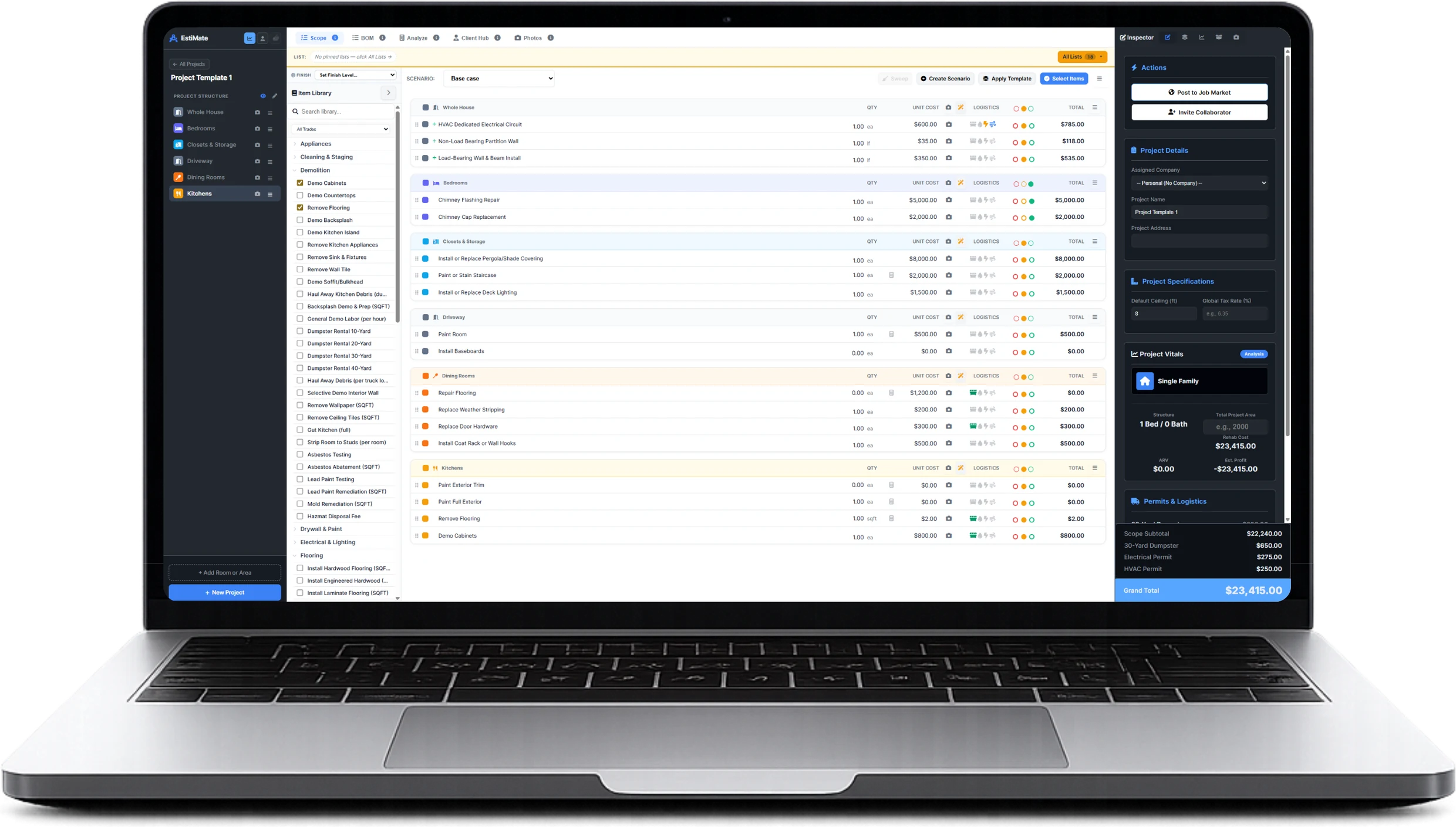
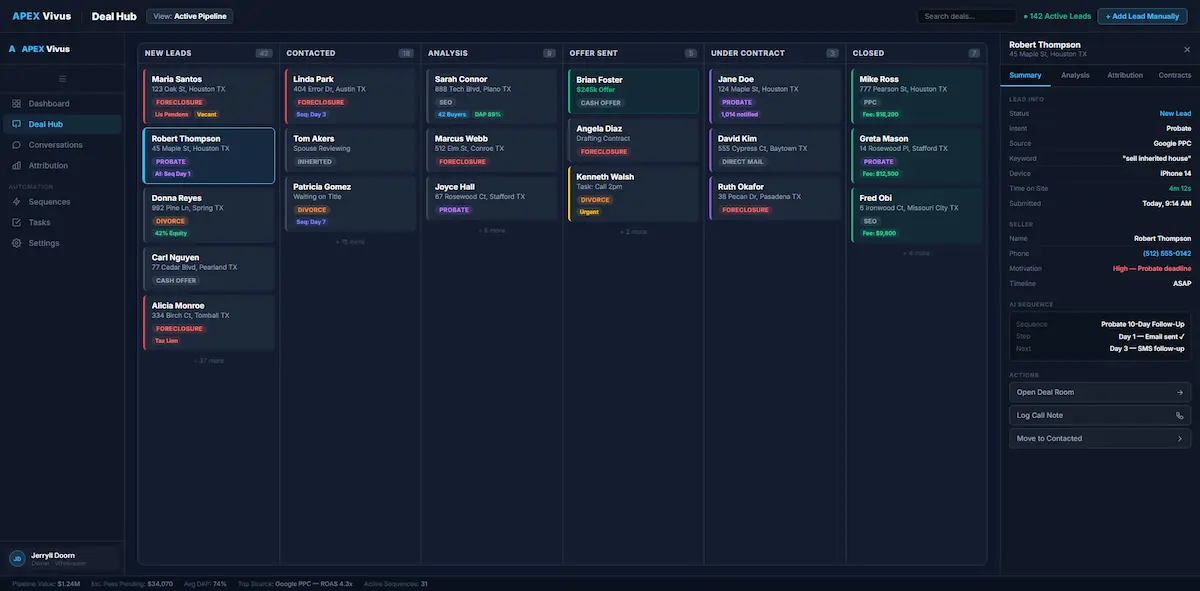
On a board, each stage is a column and each seller is a card you move to the right when something happens. Follow-up and Dead sit apart so they do not clutter the deals in motion, but they are never deleted: many deals come from the Follow-up lane months later.
Mistakes to avoid.
"They seemed interested" is not a stage. Move a lead only when something happened.
Fifteen stages means nobody agrees where a lead goes. Seven plus two side lanes is enough.
Without a limit, offers sit unanswered for a month and nobody notices.
Not now is not never. Many deals close from the Follow-up lane a year later.
Write down what each stage means, so "Talked" means the same to everyone.
Count how many leads reach each stage each month. Where they stop is what to fix.
Questions, answered.
What are the stages of a motivated seller lead?
New, Contacted, Talked, Appointment, Offer Sent, Under Contract and Closed, plus two side lanes: Follow-up (not now) and Dead (wrong number, sold elsewhere, or asked you to stop).
When should a lead move to the next stage?
Only when something happened that the next stage requires: you talked, you saw the house, they have your offer, they signed. Never because you hope they will.
What is the Follow-up stage?
Follow-up is the lane for sellers who are not ready now but did not say never. You check in calmly every few weeks, then monthly, for a year or more. Many deals come from this lane.
How long should a lead stay in one stage?
It depends on the stage: a New lead should be reached within an hour in the daytime, an offer should get a follow-up call within a week, and any contract deadline should be watched daily.
How many stages should a real estate CRM have?
Seven main stages and two side lanes is enough for most investors. More stages make it harder for a team to agree where each lead belongs.
The free tools that help, at $0.
Every one of these is free. Use them before you pay for anything.
- The free Ethical Wholesaling Course →The Ethical Wholesaling Course is a free 30-day course that takes you to your first wholesale deal one lesson and one task a day, and comes with free cash buyers, a free deal marketplace, free Calculizers and a free community.
- Wholesale Calculizer →The Wholesale Calculizer is a free wholesale deal calculator: enter the after repair value and the repairs, and it gives your maximum allowable offer and your assignment fee.
- Post your contract free →The REILink Property Repository is a free marketplace where you post a property you have under contract as a full deal page, and matched cash buyers see it.
- Wholesaling community →The REILink wholesaling community is a free group of wholesalers, cash buyers, lenders and agents where you ask questions, share deals and learn from people a few deals ahead of you.
Weighing your options? See them side by side.
Honest, scored comparisons of the systems investors move between, the good and the bad of each. And if you would rather ask than read, Humphrey answers out loud.
- Best Carrot alternativesEvery Carrot alternative scored, the good and the bad.
- The Carrot alternativeWhat you get when you move from Carrot, and what it costs.
- Apex Vivus vs CarrotFeature by feature, price by price.
- Best REsimpli alternativesThe CRMs wholesalers move to, scored on one standard.
- The REsimpli alternativeEverything REsimpli does, plus the website and the follow-up.
- Apex Vivus vs REsimpliSide by side, yearly price with yearly price.
- Apex Vivus vs REI BlackBookWhere each one is stronger.
- Apex Vivus vs GoHighLevelBuilt for investors vs built for agencies.
This guide's companions.
- Best CRM for real estate investorsInvestor CRMs scored on one standard.
- How to organize real estate leadsOne place, one stage, one next step for every lead.
- Why seller leads go coldThe seven reasons, and the fix for each.
The other software guides, in plain words.
- Best real estate investing softwareThe whole investor stack, what to look for and how to choose.
- Best rehab estimating softwareEstimating repairs before you make an offer.
- Best real estate wholesaling software13 tools scored, with prices and the laws software must handle.
- Best real estate deal analysis softwareAnalyzers compared, and the inputs that make a bad deal look good.
- Best software for finding cash buyersBuyer lists that buy, compared.
- Best motivated seller softwareTools for finding sellers, and why lists alone fail.
- Best real estate offer softwareMaking offers sellers accept and buyers pay.
- MAO calculatorYour maximum allowable offer, with the formula shown.
- Assignment fee calculator (MaxFee)The highest fee your buyers will still pay.
- Best house flipping softwareRunning a flip from offer to sale.
- Best real estate disposition softwareSelling contracts to buyers who close.
- Best real estate investor website buildersEvery builder compared.
- Best real estate comps softwareComps tools compared, and what they miss.
- ARV calculatorAfter repair value from your comps, adjusted.
- Best real estate lead generation softwareWhere seller leads really come from.
- Best real estate follow-up softwareFollow-up that runs without you.
- Best SEO software for real estate investorsRanking for sellers, compared.
- Real estate marketing attribution softwareWhich marketing brought which deal.
- AI software for real estate investorsWhat AI really does today, and what it cannot.
- Property data software for real estate investorsData tools compared, and how fresh their data is.
- Real estate investor contract softwareContracts, e-signature and deadlines.
- Real estate investor lead capture softwareForms that turn visitors into sellers who call.
- Best real estate agent softwareFor agents who work with investors and sellers.
- Best CRM for real estate agentsAgent CRMs compared.
Ready to run every step of the deal in one system?
Find sellers, reach them first, price the repairs, make an offer backed by what cash buyers really pay, sign the contract and get paid, in Apex Vivus, for $97 a month for your whole team. Moving from another system is free.
Hi, I'm 
Want me to walk you through this guide?
Can't hear me? Make sure your speakers are on