How to build a cash buyer list that actually closes.
Updated · About 14 minutes to read
To build a cash buyer list, start from who actually bought: pull the cash purchases near you from the last 12 months in your county's deed records, find the person behind each company that bought, call them, and write down what each one buys (their buy box). Verify they can close, sort them into A, B and C, and update the list every month. A list built this way has fewer names and far more closings than any list of people who once filled in a form.
This guide walks through each step the way I do it, what to ask a buyer on the first call, the columns to keep, and the mistakes that fill a list with names who never buy.
What is a cash buyer list?
A cash buyer list is a list of investors who buy houses without bank financing, with each buyer's contact details, buy box (what they buy, where and at what price), purchase history and reliability, used by wholesalers to sell contracts and by investors to sell properties quickly.
When you wholesale, you put a house under contract with a seller and then sell that contract to someone who will actually buy the house. That someone is almost always a cash buyer: a flipper, a landlord or a builder who can close in two or three weeks without waiting on a bank. Your buyer list is the list of those people. It decides how fast you sell a contract, how much you can earn on it, and whether you can make a seller a promise you can keep.
Most new wholesalers build the list backwards. They collect anyone who says "I buy houses": people from a Facebook group, a meetup sign-in sheet, a form on a website. The list grows to a few hundred names, they send their first deal to all of them, and nobody answers. The names were never buyers. They were people who liked the idea of buying.
A list that closes is built the other way round. You start from people who already bought houses like yours, in your area, with cash, recently. Public records show you exactly who they are. Then you talk to each one and write down what they buy. Ten real buyers who closed in your ZIP codes last year are worth more than a thousand sign-ups, because when you send them a deal that fits, they answer.
A solid contract always finds a buyer. The list does not create the deal; a good contract at the right price does. What the list does is make the sale fast and predictable, so you can tell a seller when you will close and mean it.
How do you build a cash buyer list, step by step?
Eight steps. The first four find the buyers, the next three turn them into a list you can sell to, and the last keeps it alive.
Pick the area and the kind of house
Buyers buy by area and by type, so build your list the same way. Write down the ZIP codes you market in and the kind of house you usually get under contract: say, 3-bedroom ranches from the 1960s that need a roof and a kitchen, in a price range of $90,000 to $160,000.
This matters because a buyer who flips $400,000 colonials in the suburbs will never buy your $110,000 rental in the city, however good the numbers are. Starting narrow means every buyer you find is a buyer for the houses you actually bring in.
Pull the cash purchases
Look up the sales in your ZIP codes from the last 12 months and keep the ones with no mortgage recorded. A purchase with no loan behind it was paid in cash, or with private money that behaves like cash. Note the address, the price, the date and the name on the deed.
Many counties let you search recorded deeds online for free, one record at a time. That works for a few ZIP codes but takes hours. A property data tool does the same search in minutes and lets you filter by sale date, price and "no mortgage". Either way, look for names that appear more than once: someone who bought three houses in your area last year is a far better lead than someone who bought one.
Sort the purchases by buyer name. The names that repeat are your first calls.Find the person behind each company
Most investors buy through an LLC, so the deed shows a company, not a person. Your state's business registry (usually on the Secretary of State's website, and free) lists each LLC's registered agent and often its members or managers. That is the person you want to reach.
Some LLCs list only a lawyer or an agent service as the registered agent. Then look at the mailing address on the deed or the tax bill, and at other companies registered to the same address: investors often own several.
Get their numbers, carefully
Now find a phone number and an email for each person. Skip tracing services search public and commercial records and return the numbers linked to a name and address. Expect to get a working number for most people, not all.
Before you call or text anyone, check every number against the national do-not-call registry and your state's list. A buyer you are cold-calling has not given you permission yet.
Texting or auto-dialing a cell phone without the person's consent can cost $500 to $1,500 per message under the Telephone Consumer Protection Act. Call by hand, from your own phone, and only numbers that are clear.Call and write down the buy box
Do not pitch a house on the first call. You are calling to learn what they buy, so that every deal you send them later fits. Tell them you saw they bought on a street in your area, that you find off-market houses there, and ask what they are looking for.
Then ask, and write down their answers in their own words: which areas, which price range, which kind of house, how much repair work they take on, whether they flip or hold, how they pay, how fast they can close, and what makes them say no. That is their buy box. Most investors are happy to tell you, because you are offering to bring them houses they would otherwise have to find themselves.
End every call by asking: "If I send you something that fits, what is the best way to reach you?"Add the other sources
Deed records find the buyers who already bought. A few other places find the ones who are about to. Title companies and real estate lawyers who close investor deals know who closes on time. Hard money lenders know who is borrowing to buy right now. Landlords with several rentals in your area are often buyers even if they bought their last house years ago. Local investor meetups and other wholesalers are worth a coffee.
And the REILink cash buyers network is free: buyers save their buy box once and see the deals that fit it, so a contract you post reaches them without you having to find them first.
Verify, then sort into tiers
Not every buyer is equal, and the first people to see a deal should be the ones most likely to close it. Sort them:
- A tier: bought in your area in the last 6 months, sent proof of funds or a lender letter, and closed on time with you or someone you trust.
- B tier: bought in your area in the last year, but you have not closed with them yet.
- C tier: says they buy, but you cannot find a recent purchase.
Send every deal to the A tier first, give them a day, then open it to B. C buyers have to prove themselves before they see your best deals.
How to know whether a cash buyer is active: five checks before you send a deal.
Keep it fresh every month
A buyer list goes stale as fast as a seller list. Investors run out of money, change strategy, move to another city or stop buying for the winter. Once a month, pull the new cash purchases in your ZIP codes and add the new names, move buyers between tiers based on what they did, and drop the ones who have ignored your last five deals.
Also write down what happens with every deal you send: who opened it, who made an offer, who closed. After a few months that history tells you more about a buyer than anything they say on the phone.
Do it for real, step by step, in the free wholesaling course.
This guide explains how to build a cash buyer list. The Ethical Wholesaling Course walks you through it as part of your first deal, one lesson and one task a day for 30 days, with Humphrey in every lesson as a mentor who knows where you are. It is completely free, and it does not leave the hard parts to you.
You do not have to buy anything. The course is taught inside Apex Vivus, but you can do every lesson with your own website, your own CRM, your own deal analyzer and your own lead sources.
Start the free course →- Free cash buyersready on day one, by market and buy box
- A free deal marketplaceyour contract goes to every buyer it fits
- Free Calculizersthey do the math and flag what is wrong
- A free communitywholesalers, buyers, lenders and agents
What should a cash buyer list keep for each buyer?
Whether you keep it in a spreadsheet or in software, each buyer needs the same columns. The ones people skip are the ones that make the list useful: the last purchase, and what happened with the deals you already sent.
| Column | Why it matters |
|---|---|
| Person and company | You call the person; the deed shows the company. |
| Phone, email, do-not-call status | How to reach them, legally. |
| Areas | The ZIP codes or neighborhoods they buy in. |
| Price range and type | So you never send a $300,000 house to a $120,000 buyer. |
| Condition and repair level | Cosmetic, full rehab, or tear-down. |
| Strategy | Flip, rental, BRRRR: it changes what they will pay. |
| Last purchase date and price | Proof they are active, and what they really pay. |
| Proof of funds, title company | Proof they can close. |
| Deals sent, offers made, closed | Who acts, and who only reads. |
| Tier | Who gets each deal first. |
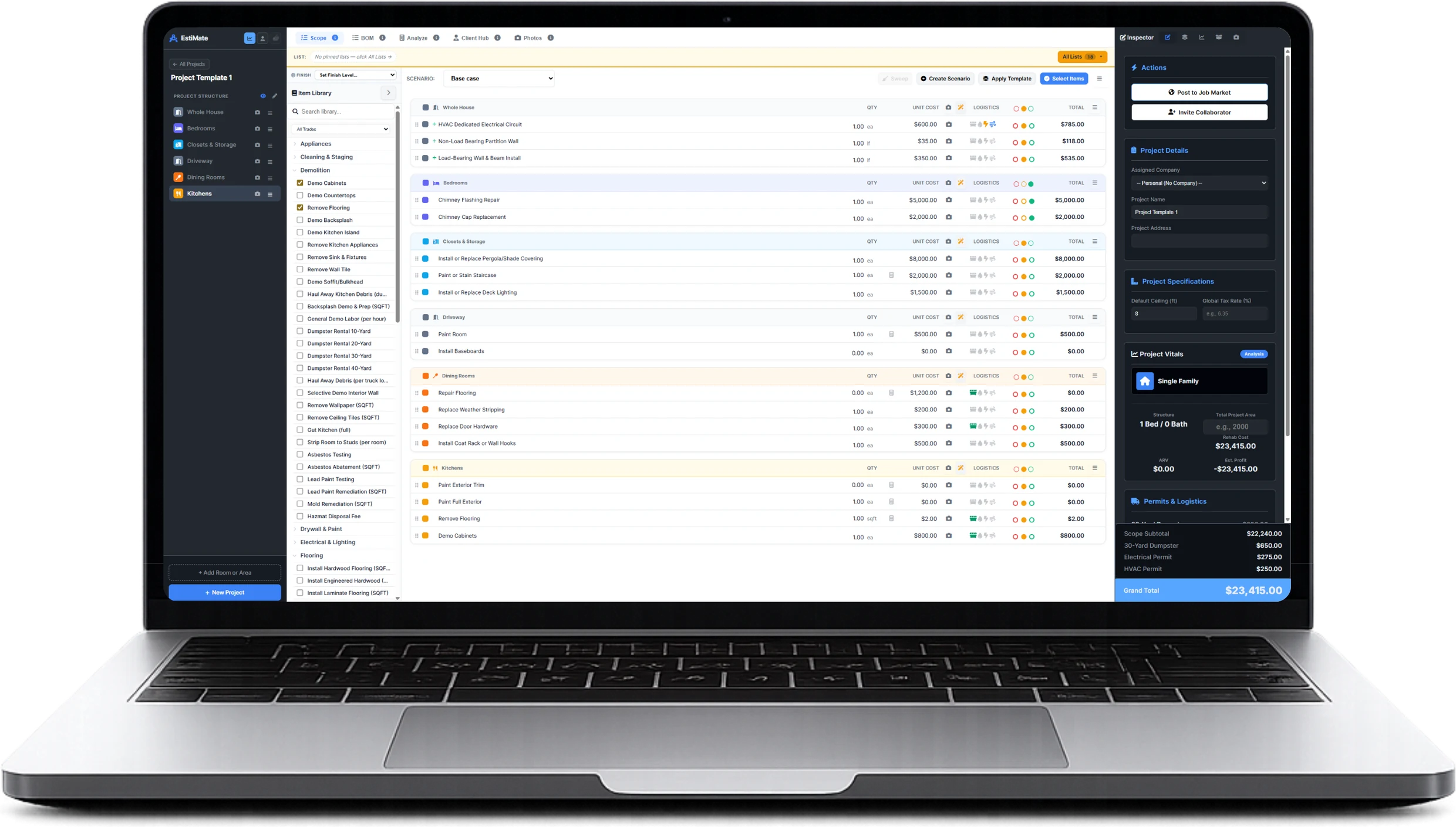
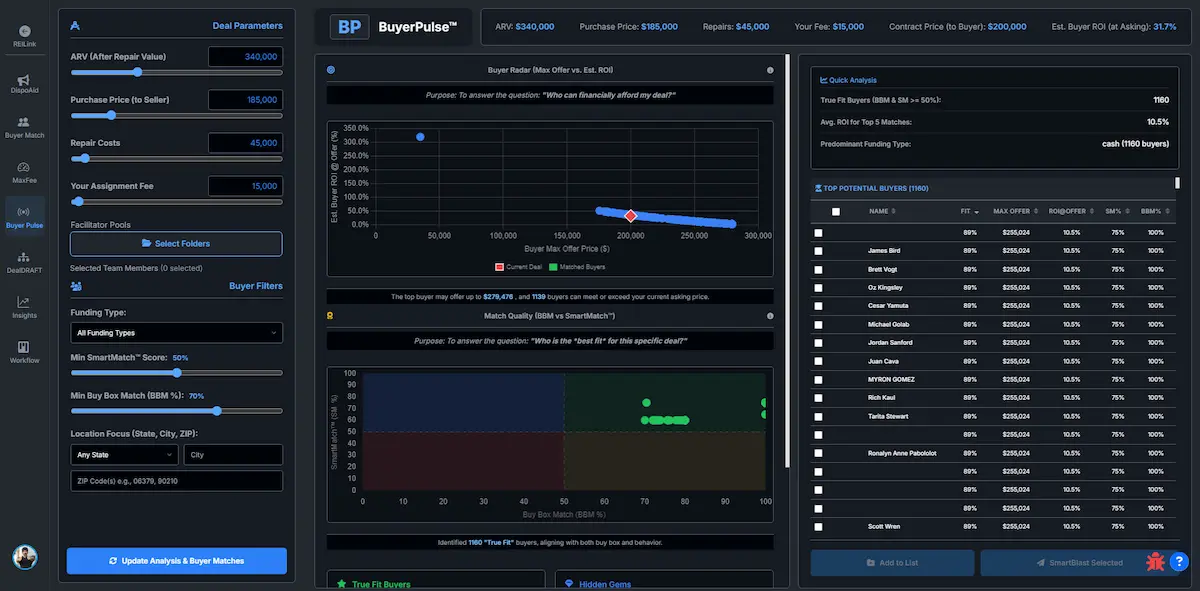
In Apex Vivus you do not have to build this by hand. BuyerPulse takes the deal in front of you and shows the buyers who can afford it, ranked by how well it fits what each one buys, from real purchases and saved buy boxes.
Mistakes to avoid.
A list of form sign-ups and group members looks impressive and sells nothing. Most of those people have never bought a house. Every name on your list should have a purchase behind it, or at least a conversation in which they told you exactly what they buy.
If your first call is "I have a deal for you", the buyer judges you on one house that probably does not fit them. Ask what they buy instead. When you call back with a house that fits, you are the wholesaler who listened.
Buyers stop buying, change areas or run out of money. A list you built in January is half wrong by June. Pull new purchases every month and move people by what they did, not what they said.
Sending every deal to everyone teaches buyers to ignore you, and it shows your deal to people who will shop it around. Send each deal to the buyers it fits, A tier first.
One illegal text can cost more than the deal earns. Check every number before you call, and never text or auto-dial a cell phone without permission.
Questions, answered.
How do I build a cash buyer list?
Pull cash purchases near you from the last 12 months in deed records, find the person behind each buying company, get their numbers and check them against do-not-call lists, call and write down each buy box, add title companies, lenders and investor groups, verify and tier them, and update the list every month.
Where can I find cash buyers for free?
County deed records (cash sales have no mortgage recorded), your state's business registry for LLC owners, local investor meetups, title companies and hard money lenders, other wholesalers, and free networks such as the REILink cash buyers network.
How big should my cash buyer list be?
Size matters less than activity. Three to five buyers who bought houses like yours, nearby, in the last year, are enough to sell a deal. A good contract at the right price finds a buyer; the list makes it fast.
How do I know a cash buyer is real?
Check their recent purchases in public records, ask for proof of funds and the title company they close with, and ask other wholesalers whether they closed on time.
What should I say when I call a cash buyer?
Say you saw they bought in your area, that you find off-market houses there, and ask what they are looking for: areas, price range, condition, repair level, strategy, how they pay and how fast they close. Write it down and do not pitch a house until you have one that fits.
Can I text cash buyers?
Only with their permission. Texting or auto-dialing a cell phone without consent can cost $500 to $1,500 per message under the TCPA. Check every number against the do-not-call lists and call by hand.
The free tools that help, at $0.
Every one of these is free. Use them before you pay for anything.
- The free Ethical Wholesaling Course →The Ethical Wholesaling Course is a free 30-day course that takes you to your first wholesale deal one lesson and one task a day, and comes with free cash buyers, a free deal marketplace, free Calculizers and a free community.
- Free cash buyers network →The cash buyers network is a free network where cash buyers save their buy box once (area, price, condition) and get matching deals, so a wholesaler's contract reaches the right buyers.
- Post your contract free →The REILink Property Repository is a free marketplace where you post a property you have under contract as a full deal page, and matched cash buyers see it.
- Wholesaling community →The REILink wholesaling community is a free group of wholesalers, cash buyers, lenders and agents where you ask questions, share deals and learn from people a few deals ahead of you.
- Private money lenders network →The private money lenders network is where investors and private lenders meet around real deal pages with the after repair value, the repair scope and the numbers.
Weighing your options? See them side by side.
Honest, scored comparisons of the systems investors move between, the good and the bad of each. And if you would rather ask than read, Humphrey answers out loud.
- Best Carrot alternativesEvery Carrot alternative scored, the good and the bad.
- The Carrot alternativeWhat you get when you move from Carrot, and what it costs.
- Apex Vivus vs CarrotFeature by feature, price by price.
- Best REsimpli alternativesThe CRMs wholesalers move to, scored on one standard.
- The REsimpli alternativeEverything REsimpli does, plus the website and the follow-up.
- Apex Vivus vs REsimpliSide by side, yearly price with yearly price.
- Apex Vivus vs REI BlackBookWhere each one is stronger.
- Apex Vivus vs GoHighLevelBuilt for investors vs built for agencies.
This guide's companions.
- Best software for finding cash buyersBuyer lists that buy, compared.
- How to know whether a cash buyer is activeFive checks before you send a deal.
- What is a real estate investor buy box?The eight parts of a buy box, with examples.
The other software guides, in plain words.
- Best real estate investing softwareThe whole investor stack, what to look for and how to choose.
- Best rehab estimating softwareEstimating repairs before you make an offer.
- Best real estate wholesaling software13 tools scored, with prices and the laws software must handle.
- Best real estate deal analysis softwareAnalyzers compared, and the inputs that make a bad deal look good.
- Best CRM for real estate investorsInvestor CRMs scored on one standard.
- Best motivated seller softwareTools for finding sellers, and why lists alone fail.
- Best real estate offer softwareMaking offers sellers accept and buyers pay.
- MAO calculatorYour maximum allowable offer, with the formula shown.
- Assignment fee calculator (MaxFee)The highest fee your buyers will still pay.
- Best house flipping softwareRunning a flip from offer to sale.
- Best real estate disposition softwareSelling contracts to buyers who close.
- Best real estate investor website buildersEvery builder compared.
- Best real estate comps softwareComps tools compared, and what they miss.
- ARV calculatorAfter repair value from your comps, adjusted.
- Best real estate lead generation softwareWhere seller leads really come from.
- Best real estate follow-up softwareFollow-up that runs without you.
- Best SEO software for real estate investorsRanking for sellers, compared.
- Real estate marketing attribution softwareWhich marketing brought which deal.
- AI software for real estate investorsWhat AI really does today, and what it cannot.
- Property data software for real estate investorsData tools compared, and how fresh their data is.
- Real estate investor contract softwareContracts, e-signature and deadlines.
- Real estate investor lead capture softwareForms that turn visitors into sellers who call.
- Best real estate agent softwareFor agents who work with investors and sellers.
- Best CRM for real estate agentsAgent CRMs compared.
Ready to run every step of the deal in one system?
Find sellers, reach them first, price the repairs, make an offer backed by what cash buyers really pay, sign the contract and get paid, in Apex Vivus, for $97 a month for your whole team. Moving from another system is free.
Hi, I'm 
Want me to walk you through this guide?
Can't hear me? Make sure your speakers are on